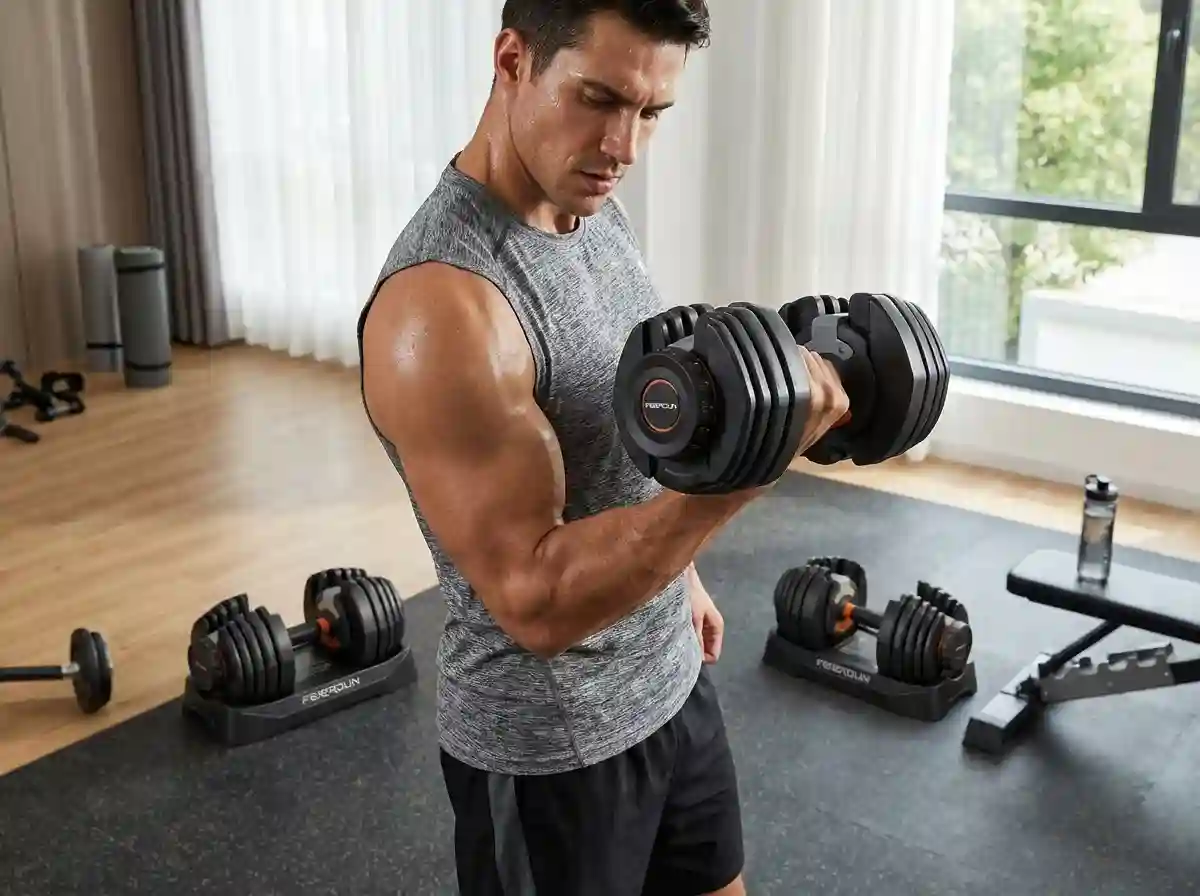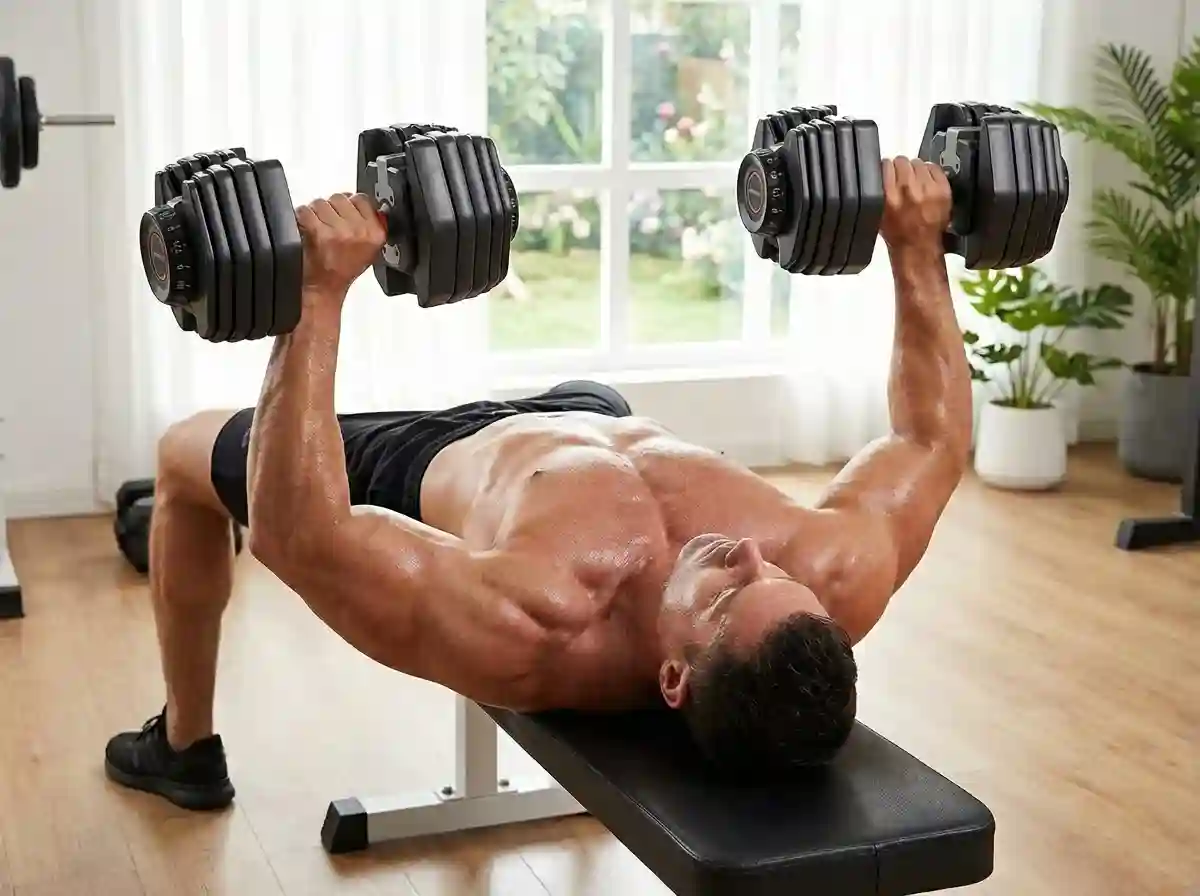
- The setup — why this question is harder than it looks
- The load difference: 17% is not trivial
- What the EMG data actually shows
- The triceps, biceps, and shoulder picture
- Incline, flat, wide, narrow — does it matter?
- Shoulder health and rehab considerations
- Practical programming: how to use both
- The honest verdict
The Setup — Why This Question Is Harder Than It Looks
Walk into any gym and you'll find two camps: the barbell loyalists who treat the flat bench press like a religious ritual, and the dumbbell devotees who will tell you, with complete confidence, that dumbbells give a "deeper stretch" and "better mind-muscle connection." Both camps are right about something — and both are missing part of the picture.
The real question isn't which one is better. It's: better for what, in whom, and in what phase of training? The answer requires looking at what electromyography (EMG) research tells us about how the pectoralis major, triceps, and shoulder stabilizers actually respond to each implement — and then translating that into something useful at the programming level.
Surface electromyography measures the electrical activity of a muscle during exercise. Researchers normalize readings to a maximal voluntary isometric contraction (MVIC) so they can compare activation levels across exercises fairly. A higher EMG signal means more motor units are being recruited — more "muscle effort," roughly speaking.
The fundamental structural difference between the two movements is simple: a barbell locks both hands into a fixed track, eliminating most mediolateral instability. Dumbbells don't. Each hand moves independently, forcing the shoulder girdle — and its stabilizers — to work continuously to prevent the weights from drifting out of alignment.
The Load Difference: 17% Is Not Trivial
Here's the most concrete data point in this entire debate: in a well-controlled study by Saeterbakken et al. (2011), resistance-trained men were tested for 1-repetition maximum across the Smith machine, barbell, and dumbbell bench press. The results were consistent and clear.
| Exercise | Average 1RM | vs. Barbell | Effect Size |
|---|---|---|---|
| Barbell Bench Press | 100.3 ± 15.6 kg | Reference | — |
| Smith Machine Press | 97.4 ± 14.5 kg | –2.9% | 0.18 (trivial) |
| Dumbbell Bench Press | 83.2 ± 13.8 kg | –17.1% | 1.11 (large) |
That 17% deficit is what researchers call the stability-force trade-off. When the nervous system has to dedicate motor resources to stabilizing an unpredictable load, less "bandwidth" remains for the primary pushing effort. You simply can't send maximum drive to the pectoralis major and simultaneously manage the 3D trajectory of two independent dumbbells at full effort.
The ~17% load deficit with dumbbells is not a training deficit. It reflects redirected neural resources — not reduced muscle stimulus. The chest often receives an equivalent or greater stimulus despite the lower absolute load.
What the EMG Data Actually Shows
This is where things stop being simple. Across the published literature, there are three possible findings: the barbell activates the pectoralis major more, the dumbbell does, or they're roughly equivalent. You can find studies in each category — and the differences come down to intensity, sets, and rep range.
| Study | Population | Load Used | Pec Major Activation |
|---|---|---|---|
| Saeterbakken et al., 2011 | Trained men | 1RM | No difference |
| Welsch et al., 2005 | Trained men | 6RM | No difference |
| Farias et al., 2017 | Trained men | 10RM × 4 sets | Dumbbell higher |
| Sadri et al., 2011 | Trained men | 10 trials | No difference |
The pattern is telling: when studies use single maximal efforts or very heavy loads with few reps, both implements produce similar pectoral activation. It's only when you accumulate volume — multiple sets, moderate rep ranges — that the dumbbell starts to pull ahead. The likely reason is the extended range of motion and peak contraction available when the dumbbells are pressed together at the top, a position simply impossible with a barbell.
The pectoralis major activates similarly under both implements at single maximal efforts. The dumbbell advantage in pec activation appears across multiple sets and moderate rep ranges — which is exactly when most hypertrophy-focused training happens.
The Triceps, Biceps, and Shoulder Picture
Here's where the two exercises truly diverge — not at the pectoralis major, but at the supporting cast. And those differences matter for both performance and shoulder health.
| Muscle Group | Higher With | Why It Matters |
|---|---|---|
| Pectoralis Major | Often Dumbbells | More ROM, peak contraction at top |
| Triceps Brachii | Barbell | Lateral force vectors and full lockout demand |
| Anterior Deltoid | Equal | Shoulder flexion required in both |
| Biceps Brachii | Dumbbells | Dynamic glenohumeral stabilization |
| Rotator Cuff | Dumbbells | Multi-plane stabilization demand |
The barbell bench press is genuinely a superior triceps exercise — not just a chest exercise that happens to involve the triceps. If your goal is to build raw pressing strength or develop the triceps alongside the chest, the barbell's advantage here is meaningful. For powerlifters, this isn't even a debate.
The biceps finding is one of the most striking in this literature. Saeterbakken et al. (2011) found a clear hierarchy: Smith machine < Barbell < Dumbbells in biceps activation (p ≤ 0.005). The biceps long head functions as a dynamic glenohumeral stabilizer — when there's no rigid connection between the weights, the biceps contracts to prevent anterior migration of the humeral head.
Incline, Flat, Wide, Narrow — Does It Matter?
The implement choice is just one variable. Bench angle and grip width both have documented effects on which portion of the pectoralis major you're emphasizing. A study by Rodríguez-Ridao et al. (2020) tested 30 trained adults at five bench angles.
| Angle | Upper Pec Activation | Practical Takeaway |
|---|---|---|
| 0° (Flat) | ~49% MVIC | Best for overall lower/mid pec mass |
| 30° Incline | ~55% MVIC (peak) | Sweet spot for upper pec development |
| 45° Incline | Moderate | More anterior deltoid, less pec |
| 60° Incline | Low | Essentially a shoulder press |
The message is clear: if you're doing incline work to build the clavicular head of the pec, a 30° incline is where the research lands. Beyond 45°, the anterior deltoid progressively takes over. Most adjustable benches don't have a 30° stop — you'll need to eyeball it between 0° and 45° notches.
Grip width matters too: wide grip (150–200% of biacromial distance) reduces total range of motion, allows heaviest loads, and puts the pectoralis major in a mechanically favorable position. A narrower grip shifts workload toward the triceps and clavicular head.
Shoulder Health and Rehab Considerations
One aspect of this debate that doesn't get enough attention is what happens when a shoulder is compromised. Here the dumbbell has a practical advantage that no amount of barbell advocacy can dismiss.
When you grip a barbell, you're locked into a fixed pronated position with a fixed distance between the hands. For many individuals, this places the shoulder in a mechanically awkward range during the eccentric phase. Dumbbells allow each shoulder to find its own neutral path, including a more neutral or semi-supinated grip angle that's often significantly more comfortable for people with anterior shoulder issues.
For individuals returning from a rotator cuff strain or mild shoulder impingement, the dumbbell bench press is often the preferred reintroduction to horizontal pressing. The independent movement of each arm prevents the dominant side from compensating for the weaker, healing limb.
Because the dumbbell press recruits the rotator cuff musculature and biceps as active stabilizers, consistent dumbbell training may build better shoulder joint integrity than barbell training alone. Exclusive barbell pressing over years can create a stability "laziness" in the stabilizer muscles that shows up as vulnerability when load demands increase.
Practical Programming: How to Actually Use Both
The obvious conclusion is that framing this as an either/or debate is wrong. The barbell and dumbbell bench press are complementary tools that address different training needs — and the best programs use them together deliberately.
| Primary Goal | Recommended Tool | Rationale |
|---|---|---|
| Maximal pressing strength | Barbell | Highest load capacity, triceps contribution, specificity |
| Hypertrophy (chest size) | Dumbbells | Greater ROM, peak contraction, unilateral balance |
| Correcting left-right imbalance | Dumbbells | Each limb works independently, prevents compensation |
| Shoulder rehab/prevention | Dumbbells | Joint freedom, stabilizer recruitment, adjustable path |
| Breaking a barbell plateau | Dumbbells | Novel neural recruitment pattern, prevents accommodation |
A practical template for an upper body push day might look like this:
- Barbell Bench Press (flat) — 4 × 3–5 reps @ 85–90% 1RM — main strength work
- Dumbbell Bench Press (flat or 30° incline) — 3 × 10–12 reps — hypertrophy volume, full ROM
- Dumbbell Fly — 3 × 12–15 reps — isolation, peak contraction
- Overhead Press or Lateral Raises — 3 × 10–12 reps — shoulder volume
- Triceps Pushdowns — 3 × 12–15 reps — triceps isolation
Notice the barbell comes first, when the nervous system is fresh. The dumbbells follow at a higher rep range, accumulating metabolic stress and volume that drives hypertrophy. This sequencing reflects that 1RM strength work demands CNS freshness more than volume work does.
The Honest Verdict
If you've been waiting for a clean winner: there isn't one, and anyone who tells you otherwise is selling something.
The barbell bench press allows you to lift more absolute weight, produces higher triceps activation, and is the non-negotiable choice for powerlifters and maximal strength athletes. The dumbbell bench press produces equivalent or superior pectoral activation at lower loads, better challenges shoulder stabilizers, and offers greater range of motion — making it arguably more valuable for chest hypertrophy and long-term shoulder resilience. Use both.
The lifters who understand this don't have a religious attachment to one approach. They use the barbell when they want to set load records and build raw strength, and they pick up the dumbbells when they want to accumulate volume, address imbalances, train around a nagging shoulder, or inject variety into a program that's started to feel stale.
Sources & Further Reading
- Saeterbakken AH, van den Tillaar R, Fimland MS. (2011). A comparison of muscle activity and 1-RM strength of three chest-press exercises with different stability requirements. Journal of Sports Sciences, 29(5), 533–538.
- Farias DA, et al. (2017). Maximal Strength Performance and Muscle Activation for the Bench Press and Triceps Extension Exercises Adopting Dumbbell, Barbell, and Machine Modalities Over Multiple Sets. JSCR, 31(7), 1879–1887.
- Welsch EA, Bird M, Mayhew JL. (2005). Electromyographic activity of the pectoralis major and anterior deltoid muscles during three upper-body lifts. JSCR, 19(2), 449–452.
- Rodríguez-Ridao D, et al. (2020). Effect of five bench inclinations on the electromyographic activity of the pectoralis major, anterior deltoid, and triceps brachii. Int. J. Environ. Res. Public Health, 17(19), 7339.
Ready to Train Smarter?
Explore FEIERDUN® adjustable dumbbells — engineered for the full range of motion science demands.